Is it worth filing an insurance claim for a cracked windshield?
Filing an insurance claim for a cracked windshield is worth it when repair costs exceed $500-$1000 and you have comprehensive coverage with a low or zero deductible. However, if the damage is minor and repair costs are less than your deductible, paying out-of-pocket is usually the better choice to avoid potential premium increases.


Discovering a crack in your windshield is frustrating, and deciding whether to file an insurance claim adds another layer of stress. The answer isn’t always straightforward—it depends on your specific insurance policy, the severity of the damage, your deductible amount, and the potential long-term impact on your premiums. Understanding these factors will help you make a financially sound decision that protects both your safety and your wallet.
Understanding Your Windshield Coverage Options
Most windshield damage falls under comprehensive coverage, which covers non-collision incidents like falling debris, hail, or vandalism. It’s important to review your specific policy before making a claim.
Many insurance companies offer special glass coverage provisions that differ from standard comprehensive claims. Some states, including Florida, Kentucky, and South Carolina, have “zero deductible” laws requiring insurers to waive deductibles for windshield repairs (though not always replacements).
Key coverage considerations:
- Full glass coverage: Some policies include separate glass coverage with no deductible for repairs or replacements
- Standard comprehensive: Your regular deductible applies, typically ranging from $250 to $1000
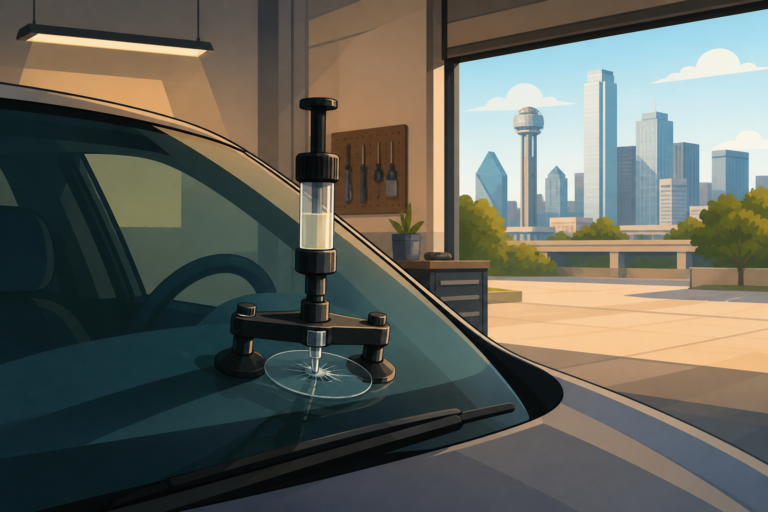
- Repair vs. replacement: Small chips under a quarter in size can often be repaired for $50-$150, while full replacements cost $200-$600 or more
Before filing a claim, call your insurance agent to understand your exact coverage. Ask specifically about glass coverage, your deductible amount, and whether a claim will be recorded as a comprehensive claim on your insurance history.
Calculating the True Cost of Filing a Claim
The immediate cost savings of using insurance might seem appealing, but you need to consider the long-term financial implications.
When paying out-of-pocket makes sense:
If your windshield repair costs $100 and your deductible is $500, filing a claim provides no benefit. Even if the replacement costs $400 against a $250 deductible, saving $150 today could cost you significantly more over time.
Insurance companies may increase your premiums after any claim, even comprehensive ones. While comprehensive claims typically have less impact than at-fault accidents, some insurers still view multiple claims as a risk factor. A premium increase of just $10-$30 per month translates to $360-$1080 over three years—far more than a single windshield replacement.
When filing a claim is worthwhile:
Filing makes financial sense when you have zero-deductible glass coverage or when the replacement cost significantly exceeds your deductible. For example, if you need a $1200 windshield replacement for a luxury vehicle and your deductible is $250, filing saves you $950 immediately.
Another scenario favoring a claim: if you’ve already filed another comprehensive claim that same policy period, the premium increase has already occurred, so an additional windshield claim may not increase rates further.


Making Your Decision: A Practical Framework
Use this decision-making framework to determine your best course of action:
Step 1: Get repair quotes. Contact 2-3 auto glass shops for estimates. Specify your vehicle’s make, model, and year, as luxury vehicles and those with advanced driver assistance systems (ADAS) require more expensive windshields.
Step 2: Review your policy details. Confirm your deductible amount and whether you have special glass coverage. Ask your agent directly: “Will this claim affect my premiums, and by how much?”
Step 3: Do the math. Subtract your deductible from the repair cost to determine your actual savings. Compare this to potential premium increases over 3-5 years.
Step 4: Act quickly. Small chips can often be repaired inexpensively, but they spread quickly due to temperature changes and road vibrations. A $75 repair today prevents a $400 replacement next month.
General rule of thumb: If you’re saving less than $300-$400 after your deductible, seriously consider paying out-of-pocket. If you’re saving $500 or more, filing a claim typically makes financial sense.
Conclusion
Deciding whether to file an insurance claim for a cracked windshield requires balancing immediate costs against long-term financial impacts. Consider your deductible, potential premium increases, and the total repair cost before making your decision.
Take action today: contact your insurance agent to understand your specific coverage, get multiple repair quotes, and address the damage quickly before a small chip becomes an expensive replacement. Your windshield is crucial for vehicle safety and structural integrity—don’t delay the repair, but make sure you choose the most cost-effective payment method for your situation.
Need help in Dallas? See our windshield replacement and chip repair, or contact Faith Low Price Auto Glass.