Windshield Replacement Step by Step: What Technicians Actually Do
Ever wonder what really happens when a technician replaces your windshield? It looks simple from the waiting room, but a proper installation is a precise, multi-step procedure where every detail affects safety. Here’s the professional windshield replacement procedure, step by step, so you know what a quality job should look like — and what corners a cheap installer might cut.
This is the detailed companion to our complete windshield replacement process guide. If you only remember one thing, remember this: the glass is the easy part. The bond underneath is what keeps you safe.
Step 1: Protect the vehicle and remove the trim
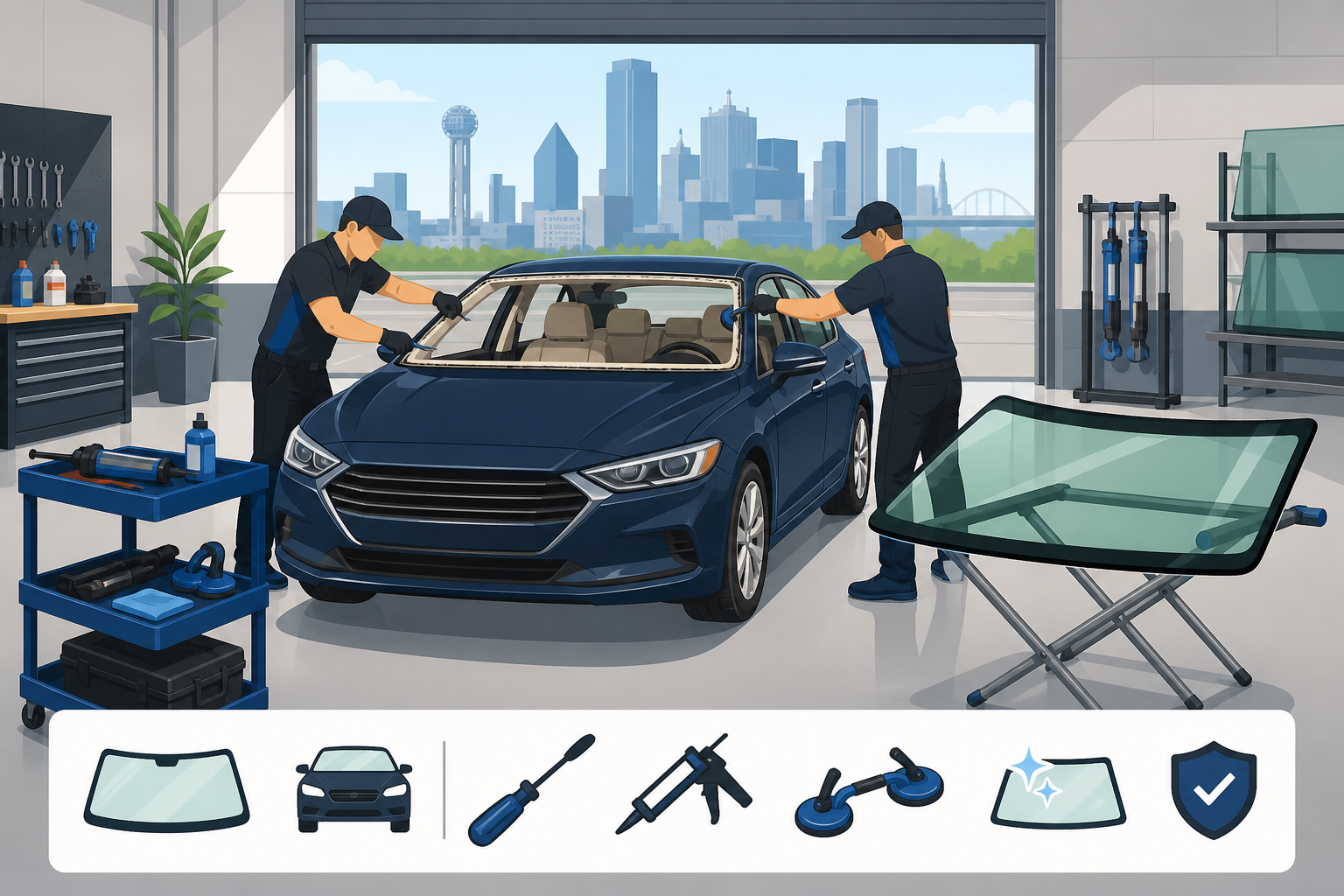
Before any glass comes out, the technician protects your car. Fender covers go over the hood and paint, the dash and seats are covered, and the wiper arms, cowl panel, and exterior moldings are removed. Interior trim around the A-pillars and the rear-view mirror assembly may also come off. This prevents scratches and gives clean access to the full perimeter of the windshield.
Step 2: Cut out the old windshield
The damaged windshield is bonded to the frame with a tough bead of urethane. To free it, the technician cuts through that bead using one of several tools:
- Cold knife — a manual blade pushed around the perimeter
- Wire-out system — braided or square wire pulled through the urethane, popular because it protects the pinch-weld
- Power cut-out tool — an oscillating blade for speed on tough beads
A skilled technician works carefully to avoid gouging the metal frame or damaging the paint, both of which can lead to rust and future leaks.
Step 3: Trim the old adhesive and prep the frame
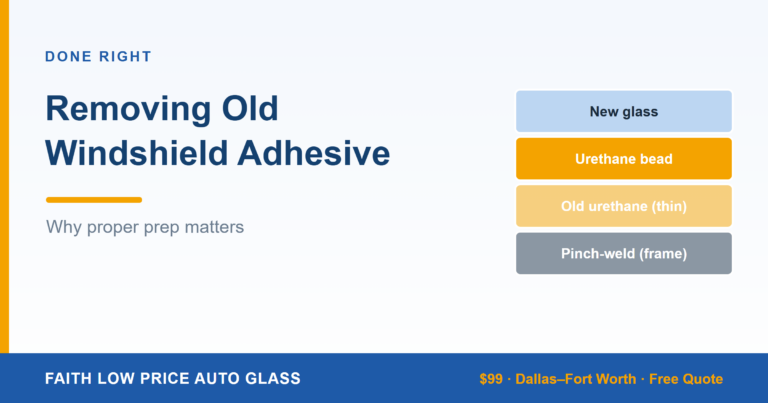
Once the glass is out, the technician trims the old urethane down to a thin, even layer rather than scraping to bare metal. Any scratches or exposed metal are cleaned and primed to prevent corrosion. This preparation is the foundation of a lasting bond — we cover it in depth in how technicians remove old windshield adhesive. Skipping it is the number-one cause of leaks and wind noise after a cheap replacement.
Step 4: Prime the glass and apply fresh urethane
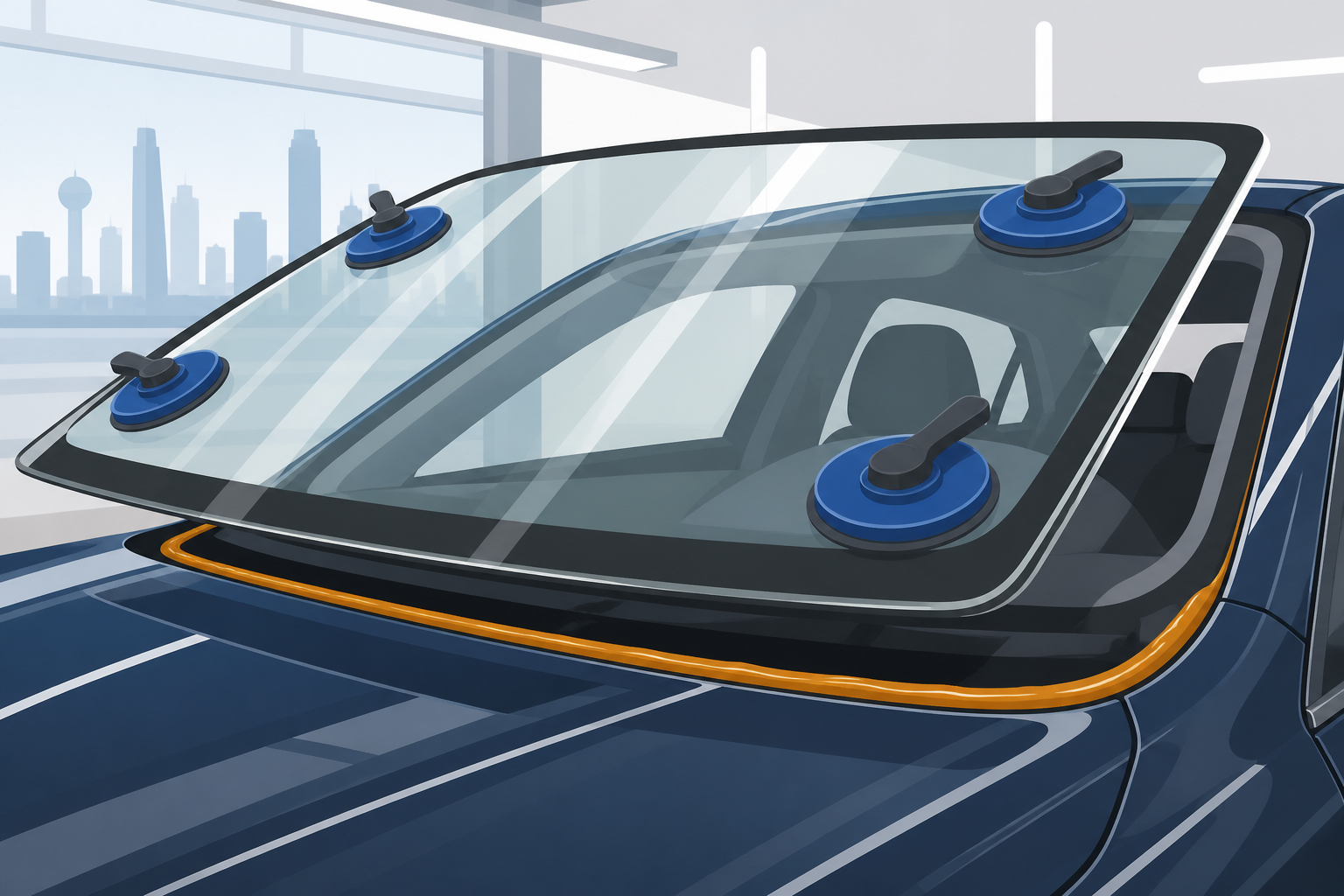
The bonding edge of the new windshield is cleaned and treated with primer to promote adhesion. Then the technician lays a continuous, even bead of automotive urethane around the frame (or the glass). Bead height and consistency are critical — too little adhesive creates weak spots, while gaps can cause leaks. The urethane used is engineered specifically for crash safety, not the kind of sealant you’d find at a hardware store.
Step 5: Set and align the new glass
Using suction cups and alignment guides, the technician carefully lowers the new windshield into position and presses it firmly into the urethane bead. Proper alignment ensures the glass sits flush, the moldings line up, and any camera bracket is correctly positioned. Even a few millimeters off can affect both appearance and sensor accuracy.
Step 6: Cure, reassemble, and recalibrate
The adhesive now needs time to cure before the vehicle is safe to drive — see windshield cure time before driving for the details. The technician reinstalls the wipers, cowl, and moldings. If your vehicle has advanced driver-assistance systems (ADAS), the forward-facing camera must be recalibrated so features like lane-keeping and automatic braking aim correctly. Calibration also affects total job time, which we explain in how long windshield replacement takes.
Should you replace a windshield yourself?
Because the windshield is a structural safety component, DIY replacement carries real risk. Common mistakes include using the wrong adhesive, failing to prime bare metal, applying an uneven bead, misaligning the glass, and driving before the urethane cures. Any one of these can cause leaks, wind noise, or — in a crash — a windshield that fails to do its job. For a few hundred dollars, professional installation with the correct materials and cure time is well worth it.
How to spot a quality installation
- No wind noise or water leaks after the job
- Moldings and trim sit flush and even
- Wipers and cameras work correctly
- The technician gave you a specific safe drive-away time
- ADAS calibration was performed if your vehicle requires it
What to expect as a customer on the day
From your side, the appointment is straightforward. You hand over the keys, the technician inspects the damage and confirms the correct glass, and the work begins. If you’re at a shop, you’ll typically wait in a lounge; with mobile service, the technician works in your driveway or parking lot. Once the glass is set, you’ll be told your safe drive-away time and given aftercare instructions before you pay and collect your vehicle.
Common installation mistakes to watch for
Knowing what can go wrong helps you spot a careless job. The most common mistakes are using a non-automotive or expired adhesive, failing to prime bare metal (which invites rust), laying an uneven or broken bead of urethane, misaligning the glass so trim doesn’t sit flush, skipping ADAS calibration, and telling the customer to drive away before the adhesive has cured. Any of these can cause leaks, wind noise, or a windshield that won’t protect you in a crash — so choose a shop that treats every step seriously.
Frequently Asked Questions
How long does the installation itself take?
The hands-on removal and installation typically take 60 to 90 minutes, not counting cure time or ADAS calibration.
Does the technician need my keys?
Often yes — access to the ignition may be needed to lower windows, test wipers, or run a dynamic ADAS calibration that requires driving the vehicle.
What is the pinch-weld?
It’s the metal flange around the windshield opening that the glass bonds to. Protecting it from damage and rust during removal is essential for a lasting seal.
Get your free Dallas windshield quote today. Faith Low Price Auto Glass offers professional windshield replacement from just $99 across the Dallas–Fort Worth metroplex, with mobile service and same-day appointments available. Request your free, no-obligation quote →