Fix A Chip Windshield Dallas
The kit on the auto-parts aisle looks simple: a syringe, a pedestal, a packet of resin, a promise that you can fix a chip windshield in Dallas in your driveway before dinner. Sometimes that is enough for a tiny, clean pit on a cool morning. A lot of the time it is not — especially after the glass has sat in 100-degree sun and you are working in a hurry with dust blowing down the street. We are Faith Low Price Auto Glass. We would rather you try a careful shop repair than learn the hard way that a failed kit can close the door on resin altogether.
Our shop is at 807 Fletcher St, Dallas, TX 75223. Mobile and in-shop, six days a week, with 24/7 online quotes. Call (214) 571-6266 if you already started a kit and you are not sure whether to keep going.
What a store kit can and cannot do
A typical kit is built for a small surface chip — a bullseye or a simple pit — on glass that is clean and dry. You stick a mount over the break, pull a weak vacuum, and hope resin finds every leg of the damage. That is a lot of hope for a piece of safety glass you look through at 70 miles an hour on I-35E.
Kits struggle with:
- Star breaks with long, hairline legs you can barely see until the sun hits them.
- Combination breaks (a bullseye with cracks coming off it).
- Chips that already hold dirt, wax, or rain.
- Damage near the edge, where the glass is under different stress.
- Anything that has started to run into a crack longer than a short finger.
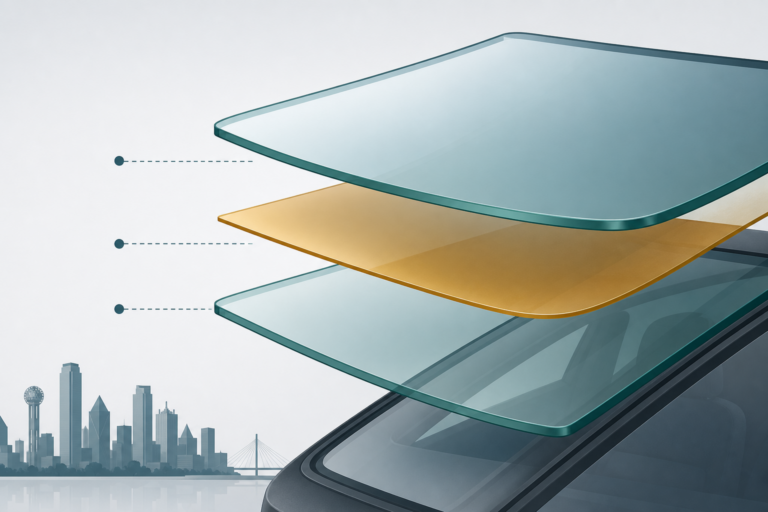
If the damage is already a crack, an edge hit, shattered glass, or something that reached the PVB interlayer, you are not in kit territory. You are in windshield replacement territory. A syringe will not put structural glass back together.
Why Dallas heat ruins a lot of DIY resin
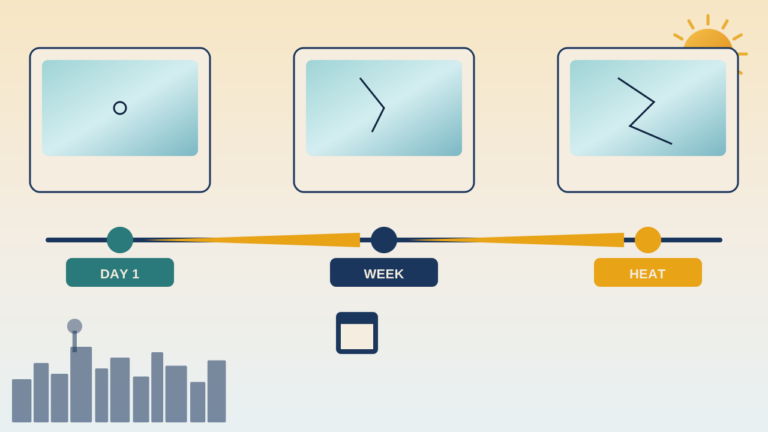
Resin is picky about temperature, moisture, and cleanliness. Dallas is picky about none of those. The windshield in a parking garage off Ross or a lot in Oak Cliff can be too hot to touch. If you inject on glass that is still oven-hot, the resin can flash, trap bubbles, or cure before it has wet out the legs of the break. If you wait until evening and the air is sticky after a storm, moisture is already in the pit.
Home kits also leave you to judge fill quality with one eye and a phone flashlight. A shop uses better vacuum, controlled resin, and a cure we can actually see through. That is the difference between a chip that is sealed and a chip that looks a little better until the next heat cycle opens it again.
Another Dallas problem: people wash the car, spray the windshield, then open the kit. Liquid in the break is the most common reason a DIY fill turns milky or refuses to take. Dry the surface all you want — the cavity is still wet.
Signs you should stop and call the shop
Stop the kit and call us if any of this is true:
- Resin is leaking out from under the pedestal and you cannot keep pressure on the break.
- You see white or cloudy trails that will not clear after the first fill.
- A crack started walking while you were working — heat and pressure can do that.
- The chip is in the driver’s view and you cannot tell if the legs are filled.
- You nicked the interlayer or the inner glass trying to “open” the pit.
- The damage sits in a camera or HUD zone and you are guessing at optical clarity.
Picking at the crater with a pin, a razor, or a drill bit from a video is how a repairable chip becomes a replacement. If you have not started, do not start those steps. If you already did, bring the car in and let us look before you add a second brand of resin on top.
How a shop resin job is different
When we take a windshield chip repair, we inspect first. Size, shape, location, dirt, moisture, and whether the break is still only in the outer lite. Small chips — often coin-to-quarter, smaller than a dollar bill, away from the edge, not in a dense camera cluster — are the ones that usually take resin. We clean what we can, inject under real vacuum, cure, and dress the pit. You will still see a faint witness mark on many repairs. That is normal. The goal is a sealed, stable break, not invisible glass.
We work the job in a bay at Fletcher Street or on a mobile visit if the site is clean enough. Same-day is often available. We do not promise every chip can be saved, and we will tell you if replacement is the honest answer instead of selling you a fill that will fail next week on I-30.
After a failed kit, can we still repair it?
Sometimes. If the kit only put a skin of resin on the surface and the legs are still open, we may be able to work with it. If the cavity is packed with the wrong resin, clouded, or contaminated, there may be nothing left to inject. That is the risk of DIY in this climate: you spend an hour in the driveway and spend the option of a proper fill.
Do not scrape yesterday’s resin out with a knife. Do not add a second kit on top. Cover the area, keep it dry, and let us see it. Bring a note about what you already put in the break if you remember the brand. It helps us decide whether repair is still on the table.
When replacement is the honest answer
Long cracks, edge cracks, cracks through the driver’s view that cannot be cleared, multiple spreading cracks, shattered glass, or damage into the interlayer need a new windshield. A failed DIY job that left the glass weak in your sight line belongs on that list too. On newer cars we will also talk about ADAS calibration after replacement. No invented prices here — coverage and part type depend on the vehicle and your policy.
If you are standing in an auto-parts aisle in Dallas debating the kit, take a photo of the chip in daylight and send it through our contact page, or call (214) 571-6266. Faith Low Price Auto Glass would rather talk you out of a bad kit than replace a windshield you tried to save with a syringe in a hot driveway.