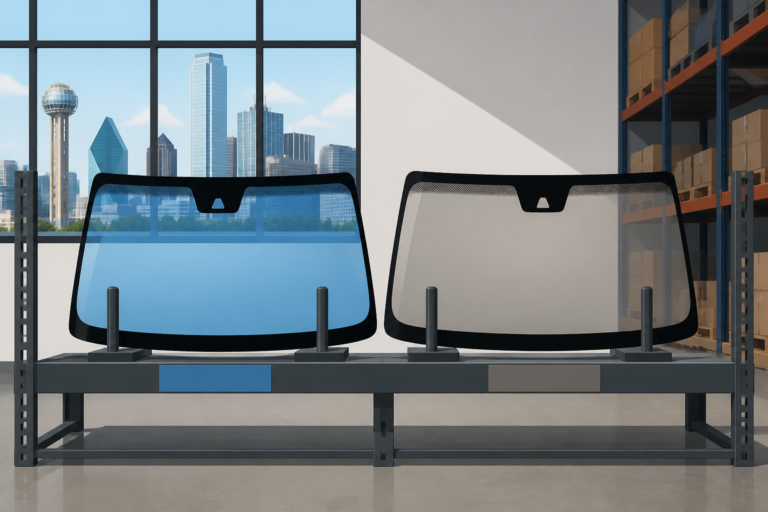
96 Camry Windshield In Dallas Cheap
A 1996 Toyota Camry in Dallas is not a novelty. You still see them on Jefferson in Oak Cliff, tucked under a carport in Lakewood, and in the slow lane on I-30 toward Arlington. The paint may be tired. The cloth seats may have outlived two owners. The car still starts, and that is enough. When a crack finally walks across that old windshield, people search “96 Camry windshield in Dallas cheap.” They should. This is not a car anyone wants to overthink. It is also not a car you can treat like a piece of patio glass.
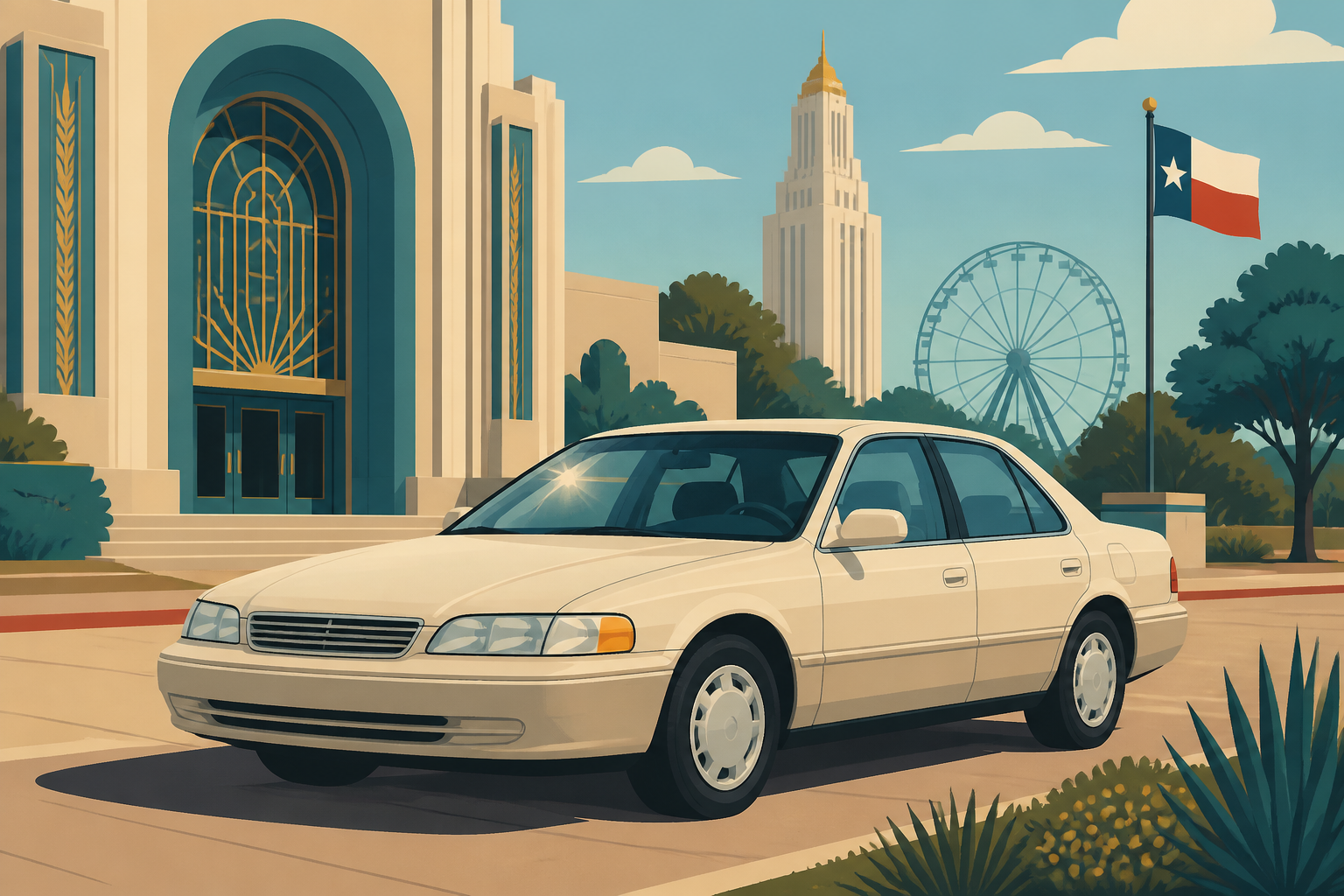
Faith Low Price Auto Glass works on these Camrys from 807 Fletcher St in Old East Dallas, near Fair Park. We replace windshields and we repair chips when a repair will still hold. Mobile service and same-day appointments cover Dallas, Arlington, Mesquite, and the rest of the Metroplex. The East Dallas shop keeps six working days. You can request a quote online any hour. Call (214) 571-6266 if you already have the VIN and a picture of the crack.
The 1996 Camry is still a working car here
Toyota built a lot of these, and Texas did not throw them all away. A mid-90s Camry is a grocery car, a campus car, a “get me to the job in East Dallas” car. It takes the same truck rock on I-35 as a new SUV. The difference is what sits behind the glass. A 1996 Camry does not have a forward camera, a rain-sensing pack, or a lane-keeping module glued to the windshield. That absence is the main reason people hope the job will stay simple, and often it does.
Simple is not the same as sloppy. The windshield on that Camry is still laminated safety glass. It still helps the cabin stay rigid. It still has to seal against a Texas downpour. Cheap, for this car, should mean the right-shaped glass and a bond that will outlast another summer. It should not mean a bargain pane dropped onto old adhesive and sent back down the street.
Older glass is simpler. The install is not.
Most 1996 Camrys take a conventional windshield with a shade band and no sensor cutouts. Aftermarket glass for this generation has been around for decades. Supply is usually friendly compared with an oddball import. The catch is condition. A car that has baked in Arlington sun for thirty years can have a cowl that crumbles when you lift it, moldings that have gone hard, and rust starting along the pinch weld where water has been sitting under a cracked bead.
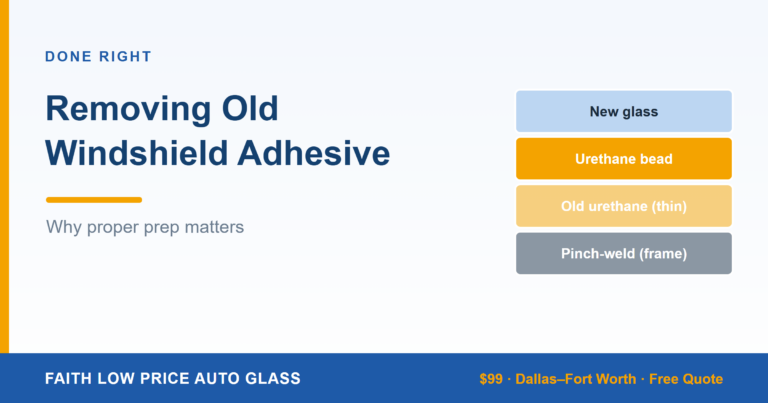
That rust is the part a rush job skips. If we set new glass on scale, the urethane does not grab. You get a leak, then you get a bigger rust problem, then you get to do the job again. A cheap Camry windshield still needs the opening cleaned, the old urethane cut back the right way, and a fresh bead applied to bare, prepared metal. There is no camera to calibrate. There is still chemistry, and there is still a safe time before you should yank the car onto I-30.
Fitment is a generation question
People ask whether a windshield from a nearby year will drop in. The 1992–1996 Camry is its own generation. Glass from a later Camry is not a shortcut. Even inside the mid-90s run, shade bands and options can split the catalog. We check the VIN and we look at the car. We do not test-fit a “close enough” piece from a different Toyota and hope the frit lines up.
Why cheap still means a proper urethane bond
The reason a 96 Camry windshield can be an affordable job is the part itself, not a shortcut in the bay. No ADAS. No camera aiming. No rain-sensor gel pad. Those absences keep the ticket from growing the way it does on a late-model commuter. They do not excuse a dry set, a missed primer step, or a molding stretched until it gaps at the A-pillar.
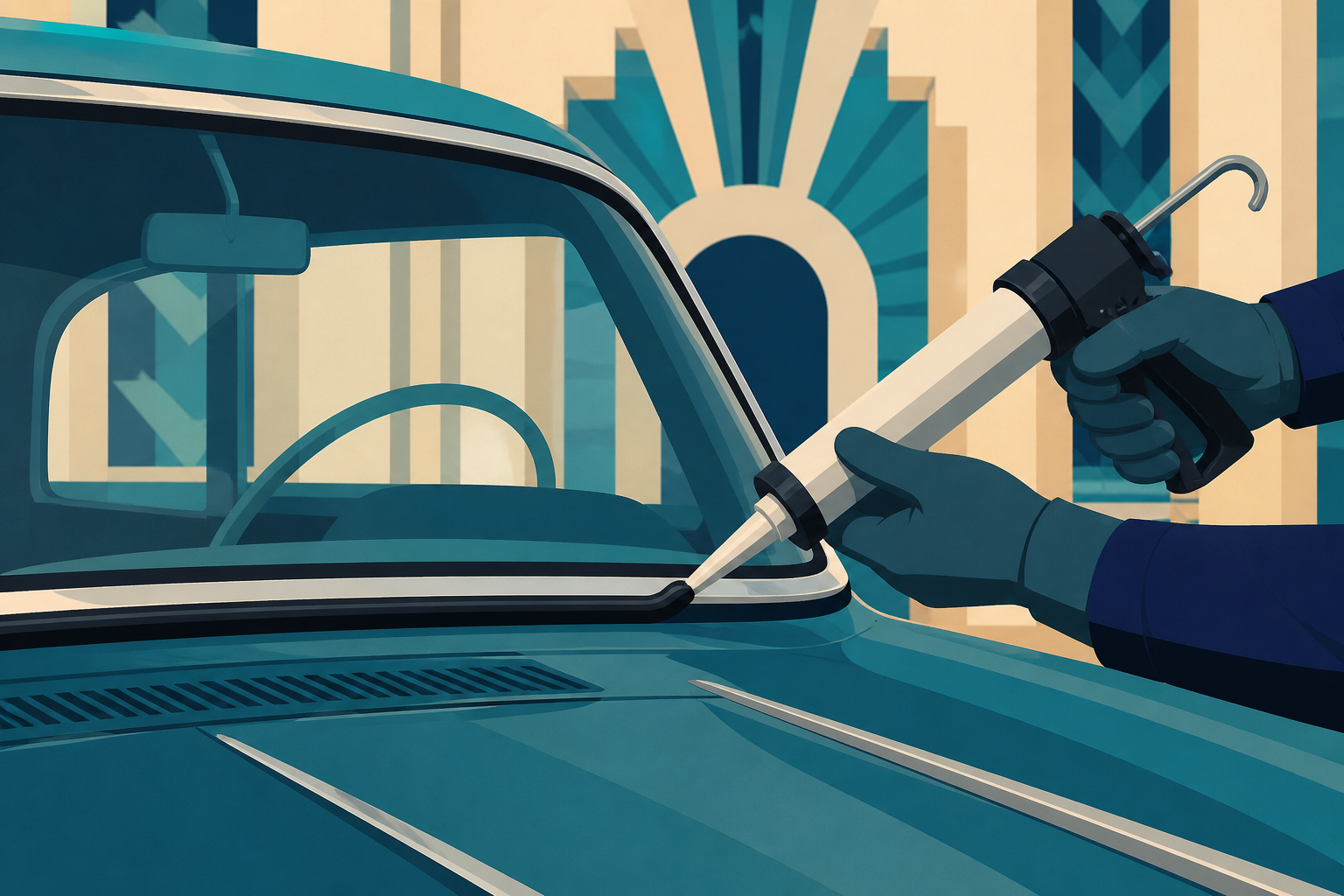
Urethane is what turns a loose piece of glass into part of the car. On a thirty-year-old Camry the opening has seen heat cycles that a two-year-old car has not. The tech has to read that opening. If the old bead is tall and dirty, it comes down. If the paint is weak at the flange, we deal with that before the new glass goes in. That is the difference between cheap-and-done and cheap-and-back-next-month.
If you want the general factors we weigh on any replacement, read the windshield replacement cost page. This post will not invent a price for a 1996 Camry. Your quote comes from the glass we can get this week, the condition of the pinch weld, and whether you want the work at the shop or in a driveway.
What we check before we put a number on a mid-90s Camry
Send the VIN. Take a photo of the crack in daylight and a photo of the whole windshield so we can see the shade band and the mirror. Tell us if the cowl is already cracked or if the car has a leak history. Those details matter more on an old Toyota than on a two-year-old crossover.
- Is the damage a single chip that might still take a repair, or a crack that already crossed the glass?
- Are the moldings intact, or have they shrunk away from the pillars?
- Is there rust at the flange that has to be treated before a new bead will hold?
- Do you need mobile service because the Camry is the only car in the house?
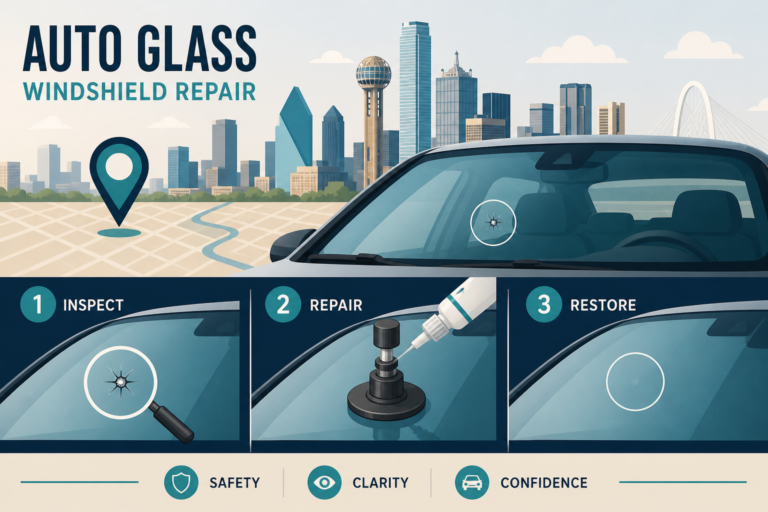
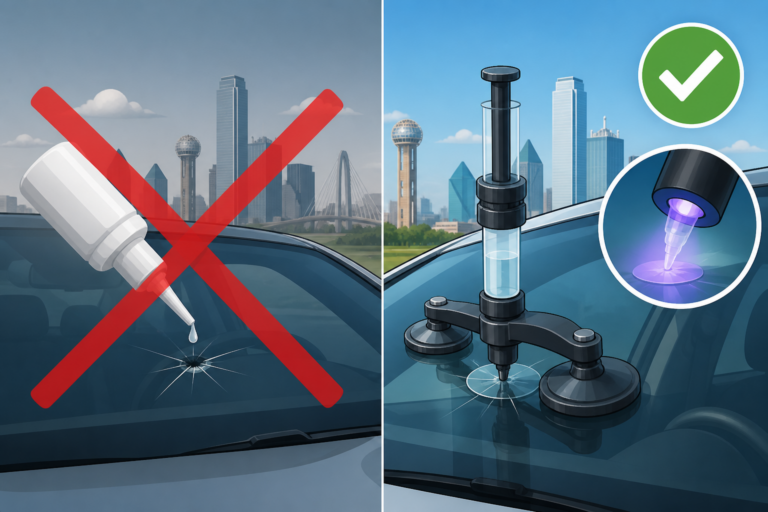
If a chip is still small and it is not in the driver’s view, we will talk windshield repair first. On a car this old, keeping the original seal is a gift when the damage allows it. When the crack is already long, windshield replacement is the clean path, and it is still a conventional job.
Next step if you want a fair quote
Coverage, if you file, depends on your policy. Ask us to look at your benefits with you. We will not tell you Texas treats every Camry windshield as a free claim. Most people paying to keep a 1996 Camry on the road just want a number they can plan around and a bond that will not whistle on the way to Arlington.
Faith Low Price Auto Glass is set up for that kind of car. Send photos from the contact page, or call (214) 571-6266. Tell us it is a 96 Camry. Send the photos. We will quote the glass that fits this generation and we will install it like the windshield still matters — because on I-35 in a storm, it does.