Windshield Dallas Tx
Dallas does not break windshields with one dramatic event. It chips them a little at a time: a dump-truck tailgate on a I-35E construction zone, gravel on a frontage road, a spring hail cell, a norther that drops the temperature forty degrees between lunch and the drive home. By the time you notice a mark in the wiper path, the glass has already taken more than one hit.
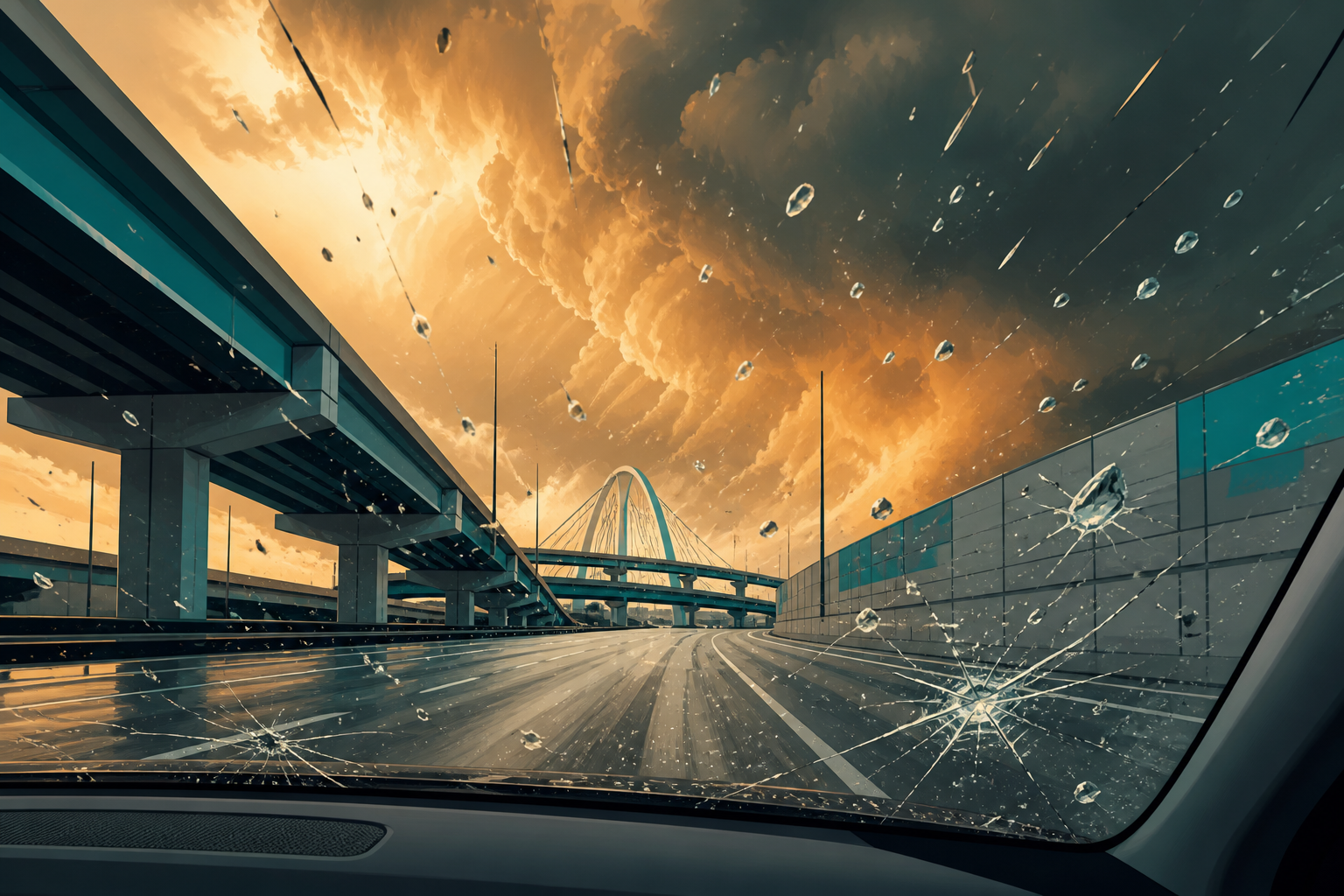
Faith Low Price Auto Glass sees this mix every week at 807 Fletcher St and on mobile calls from Oak Cliff to North Dallas. Here is what wrecks glass in this city, the damage it leaves, and what to do the same day.
Why Dallas roads are hard on laminated glass
I-35E is trucks, lane shifts, and construction barrels. Rocks leave a hauler and find the car two lengths back. I-30 adds work zones. I-635 (LBJ) adds speed. US-75 / Central and the Dallas North Tollway add density. Together they mean more stone-throwing miles than a week of Lakewood side streets.
Frontage roads make it worse: loose gravel, milled asphalt, an uncovered load. A turn in Pleasant Grove or a merge near a North Dallas job site is a common first chip. Laminated glass does not shatter. It stars, bullseyes, or starts a short crack you only see when the sun is low. City potholes in Oak Cliff or a patched cut in Uptown then flex that chip. Vibration does not create the break. It grows the ones you already have.
Hail, heat, and a sudden norther
Spring and early summer storms drop hail across DFW with little warning. A cell that looks harmless on a radar app can pit a windshield in a grocery lot or dent the roof and leave a dozen chips in the laminate. After a hail event, inspect the glass in daylight, not under a parking-garage lamp. Small pits in the driver’s sweep add up. One large strike near the edge is enough to start a crack that heat will finish.
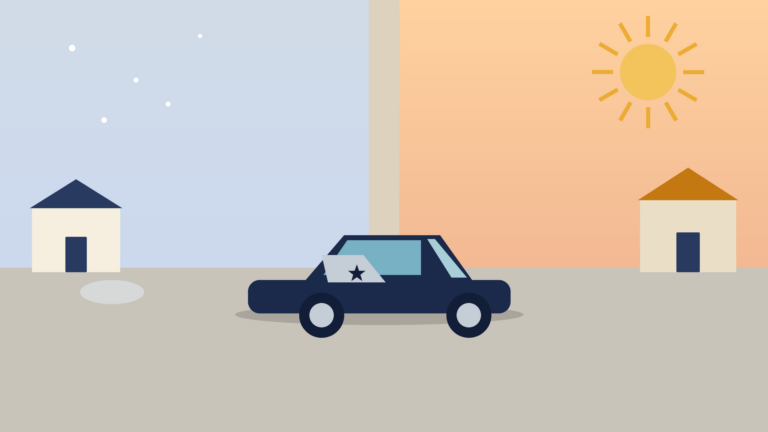
Heat is the other half of the story. Park in a surface lot in August and the windshield becomes a skillet. The outer layer expands. The plastic interlayer softens. A chip that was stable in March starts to run toward the pillar. Turn the air conditioning on full and the inside face cools while the outside stays hot. That gradient is a common reason people say “it was fine this morning.”
Sudden northers do the reverse. A windshield that sat in the sun at noon can be under a cold blast by the evening commute. Defroster on high plus a cold front plus an existing chip is a common way a crack appears on the Tollway. If you already have damage and a front is coming, get the glass looked at the same day.
Chip, bullseye, and edge crack: what you are looking at
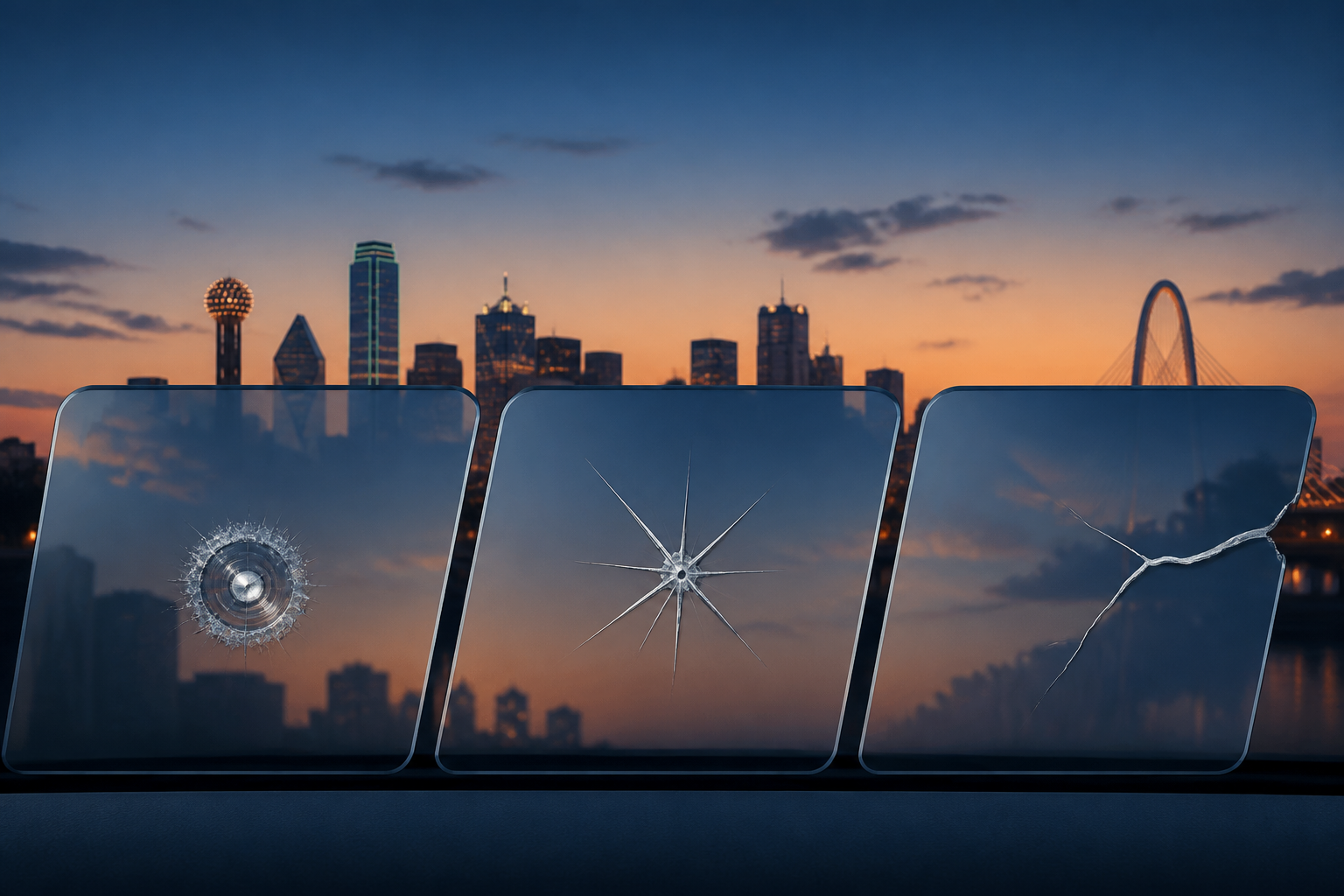
- A chip is a small pit or star. Smaller than a dime, away from the edge, and out of the driver’s view, it may still be repairable if you get to it quickly.
- A bullseye is a round cone in the outer layer. Heat and vibration open it even when the circle looks small.
- A combination break mixes a star and a bullseye and is more likely to spread.
- An edge crack reaches the urethane perimeter. Replacement is the usual outcome. Waiting “to see if it stops” rarely stops it.
- A long crack across the sight line is a visibility and inspection problem. Texas can fail glass that blocks the view. Night glare on I-30 makes it dangerous before anyone looks at a sticker.
Camera and sensor zones change the math. A chip under the rearview-mirror camera, or in a rain-sensor pad, can confuse ADAS or the automatic wipers even if the rest of the glass looks fine. Mention those features when you call. Faith can replace the windshield and handle in-house ADAS camera recalibration when the vehicle needs it.
What to do the same day you notice the damage
Do not pick at the chip. Do not pour superglue into it. A clean, dry surface is easier to assess and, if repair is still possible, easier to fill. If you have a clear chip kit, a temporary cover can keep water and dirt out until you get a real appointment. That is a stopgap, not a fix.
Avoid slammed doors and wash tunnels. If the crack is in your sight line, get off LBJ when it is safe and take a slower street to the appointment. Call (214) 571-6266 or send photos through the 24/7 quote form. Include year, make, model, VIN, and where the damage sits. The shop can say repair versus replacement and whether mobile or Fletcher Street is faster.
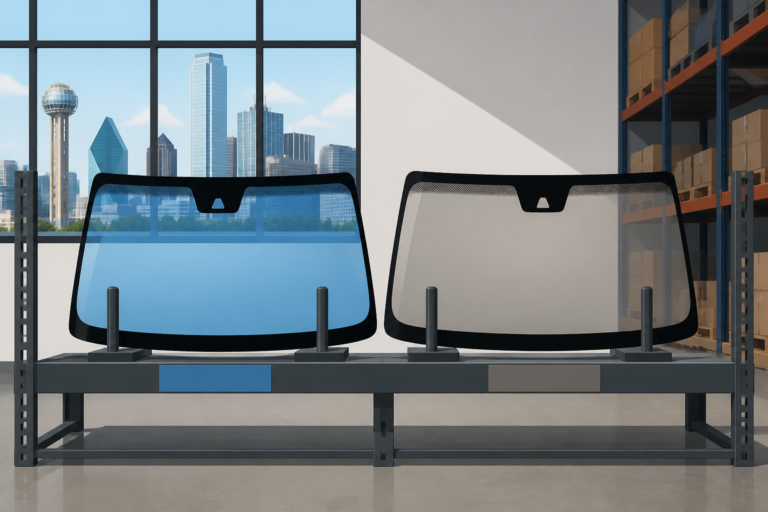
If replacement is the call, read how windshield replacement is handled so you know about glass options, the from-$99 starting point for qualifying standard glass, and when specialty glass or recalibration adds cost. Insurance often covers this under comprehensive; Faith helps with the claim if you want to file.
Neighborhoods and corridors that send the most chips
Oak Cliff and Pleasant Grove mix highway access with surface streets that see a lot of truck traffic. Lakewood and Uptown add garage pillars, tight lots, and the occasional construction gravel pile. North Dallas feeds I-635 and the Tollway. None of those neighborhoods is uniquely unlucky. They just put more cars next to more rocks, more heat, and more sudden weather.
Faith Low Price Auto Glass covers Dallas and the cities it names around DFW: Plano, Irving, Garland, Mesquite, Richardson, Carrollton, Arlington, and surrounding areas. Mobile service can meet you if the site is safe. The shop at 807 Fletcher St is the in-shop option. Hours are six days a week, with online scheduling at any hour.
The same-day rule is simple. If you can still repair it, do it before the next heat spike. If the crack is at the edge or in your view, replace it before the next norther or hail cell. Do not wait for inspection day. Check the DFW service area and send the VIN and a photo while the damage is still the size you see today, not the size it will be after another week of I-35E.