Dallas Windshields
“Dallas windshields” is not one part number. The glass in a ten-year-old work truck and the glass in a late-model crossover with a camera cluster are both windshields, and they are not interchangeable. If you order the wrong one, it will either refuse to sit in the pinch weld or it will sit and then fail the sensor, the rain channel, or the head-up display. This page is a map of the types Dallas drivers actually have — and how to tell which one is on your car — before anyone cuts urethane.
Laminated windshields and tempered back glass
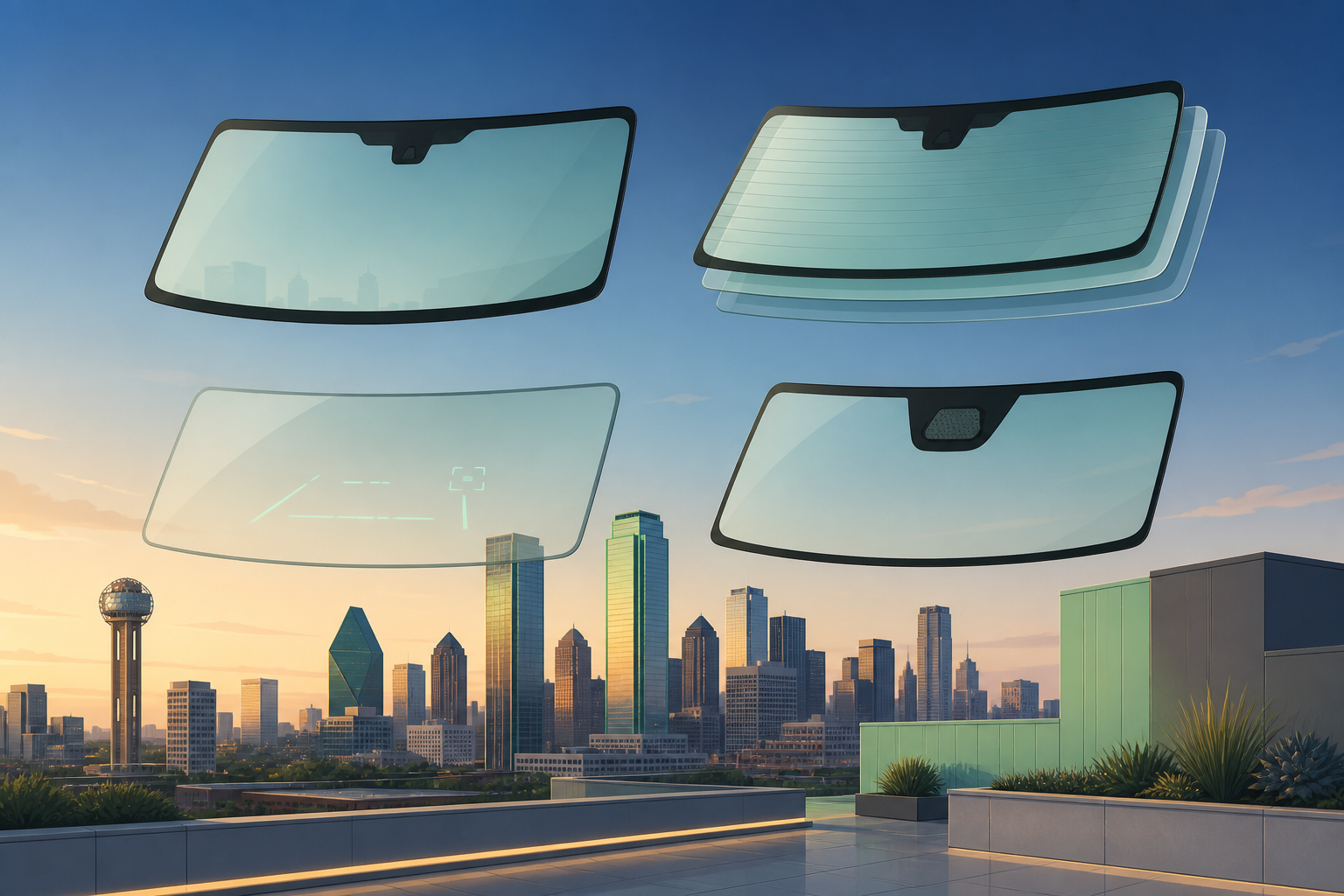
The windshield is laminated: two plies of glass and a vinyl interlayer. That is why a chip stays contained and why you should not treat the front pane like a side window. The backlite and most door glass are tempered. They are designed to granularize on a hard hit. Mixing those ideas up leads people to expect a windshield to “just shatter and fall out” the way a rear window did after a break-in in Oak Cliff. It will not. It will crack, hold, and then keep cracking.
Tempered back glass also has a different replacement path. It clips or urethane-sets without a camera bracket in most older cars, and it does not carry the same AS-1 windshield marking. If you are shopping parts from a salvage yard photo, look at the edges. A laminated windshield has a thicker, layered look and a black frit band. A tempered backlite is thinner and often has defroster lines. Faith Low Price Auto Glass replaces both; the part conversation starts with which opening you actually broke.
Acoustic and solar glass on newer Dallas vehicles
Acoustic windshields add a sound-damping interlayer. You notice them when they are missing: tire roar on 635 and I-35 gets louder, and the cabin sounds like a different car. Solar or infrared-reflecting windshields are tuned to cut heat load. In a Dallas August that is not a luxury trim gimmick. The wrong solar part can make the air conditioning work harder and can change how the factory shade band looks.
These variants often share an outline with the “standard” glass for the same body. That is the trap. A part can bolt into the opening and still be the wrong construction. The VIN and the option sticker are how you avoid a loud, hot, almost-correct windshield. If the build has acoustic glass, say so when you request a quote. Specialty glass — acoustic, heated, HUD — may cost more than the from-$99 figure the shop lists for qualifying vehicles with standard glass.
HUD, heated wiper park, and rain sensors
Head-up display windshields are not a software setting. They use a wedged or coated laminate so the speedo image sits on the glass instead of a double image on the dash. Install the non-HUD part in a HUD car and you get a ghosted projection, or no projection. Heated wiper-park glass has a bus bar and a grid at the bottom. It exists because ice and packed slush are rare here but not impossible, and because some vehicles use that heat to keep the rain sensor and camera window clear.
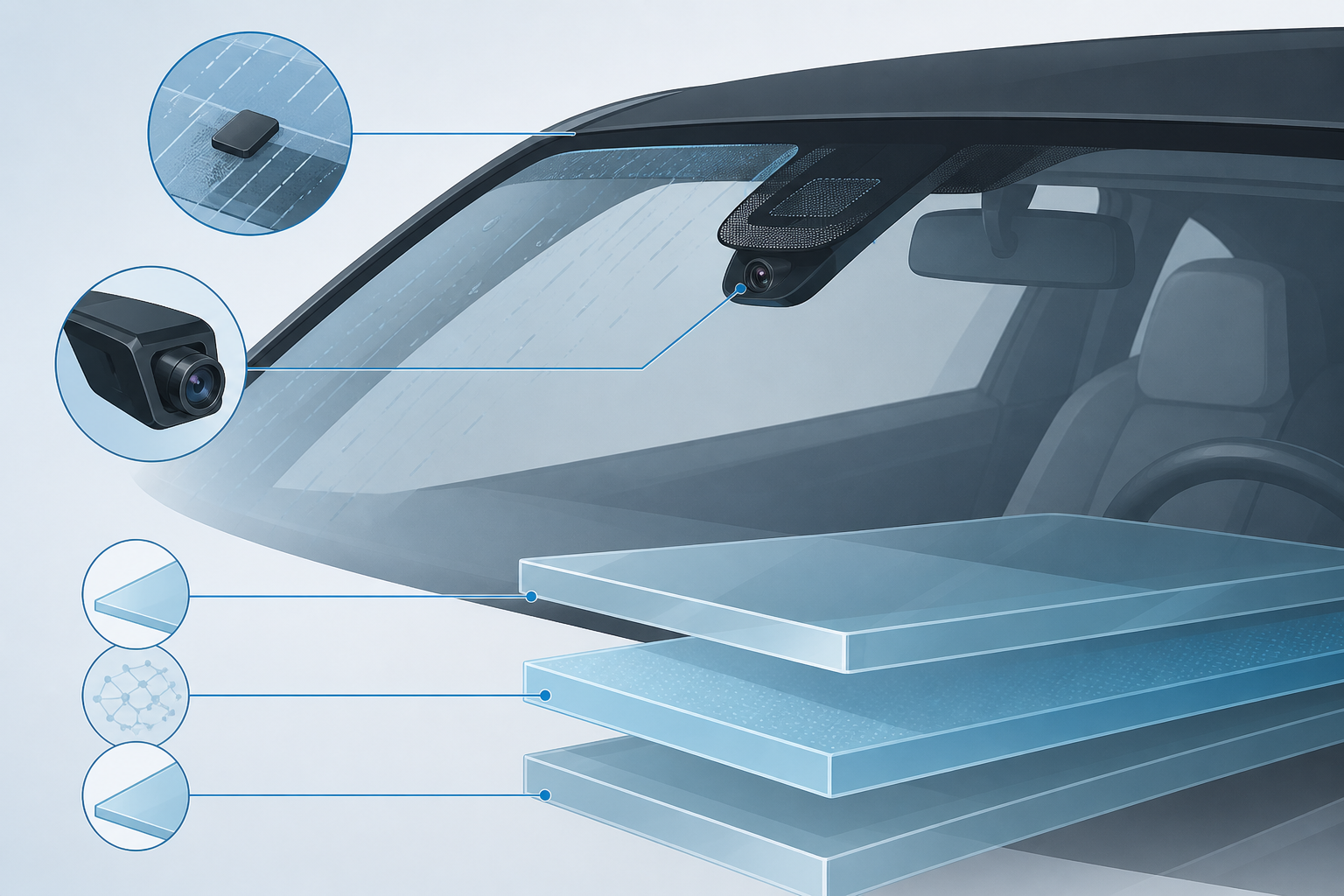
Rain-sensing windshields have a gel pad or optical block behind the glass, usually under the mirror. The replacement pane needs the matching mount and the right optical area. Skip that and the wipers either never trigger in a downpour on I-30 or they run on a sunny parking lot in Richardson. None of these features is something you “add later” with a module. They are built into the glass or they are not.
Camera brackets that live on the glass
Forward cameras for lane keeping and automatic emergency braking sit on a bracket bonded to the windshield. Some brackets are part of the glass. Some transfer. Either way, the new pane has to put that camera in the same place, at the same angle, with a clear optical window. A generic windshield with no bracket, or with a bracket off by a few millimeters, will not calibrate.
Faith Low Price Auto Glass does in-house ADAS camera recalibration when the vehicle needs it after a replacement. That step is not optional on camera cars just because the glass looks flush. If a prior shop in Arlington or Carrollton replaced the glass and the lane-keep light is still on, the part, the bracket, or the calibration is wrong. Do not keep driving it as a dashboard decoration.
Reading the VIN and options before you order
The cheapest way to identify the glass is the VIN plus a walk-around. VIN decodes the model and often the glass family. Then look: Is there a camera? A rain-sensor hump? A faint HUD rectangle on the driver’s side? Grid lines at the wiper park? A thicker acoustic mark on the etch? The door-jamb option sticker and the original window sticker, if you still have it, will list rain sense, HUD, and acoustic glass in plain language.
Photos help. A shot of the etch, the mirror mount, and the full width of the glass tells a parts person more than “2018 SUV.” If you are in Plano, Irving, or Garland and you want mobile service, have that information ready so the van arrives with the right pane. The Faith Low Price Auto Glass home page and the quote flow are built for that, not for a guess-and-return parts run.
Why a “close enough” windshield still fits poorly
Fit is more than the outline. The ceramic frit has to hide the urethane. The mirror button has to land on a prepared pad. The VIN window, if the car has one, has to line up with the dash cutout. The cowl clips have to catch. A glass that is 4 millimeters short will leak at the A-pillar the first time you take I-45 in the rain. A glass with the wrong curvature will optical-distort lane lines at night.
Wrong parts also fail quietly. Wind noise at 70. A camera that passes a cheap target test and then drops lanes on 635. A rain sensor that works in the bay and not on the road. Faith Low Price Auto Glass, at 807 Fletcher St, Dallas, TX 75223, (214) 571-6266, stocks and orders to the vehicle — OEM or aftermarket — and sets the pane with automotive-grade urethane. Lifetime workmanship warranty covers the install, not a part that was never the right type. For the actual swap, see windshield replacement. Bring the VIN. Name the sensors. That is how Dallas windshields get identified before they get replaced.