Windshields Dallas Tx
A windshield is not a flat pane you can swap by size the way you swap a wiper blade. It is laminated safety glass with a plastic interlayer, often a second acoustic layer, sometimes a heating grid, sometimes a combiner for a heads-up display, and almost always a set of brackets and pads that have to land on the same spots as the glass that came out. Get the part wrong and you will hear wind on the Dallas North Tollway, fight a rain sensor that never wakes up, or watch a camera sit behind glass it was not aimed through.
Faith Low Price Auto Glass matches windshields to the VIN, not to a guess from the tailgate badge. This page is about the glass: laminated construction, OEM versus aftermarket, and the specialty features common on DFW cars and trucks.
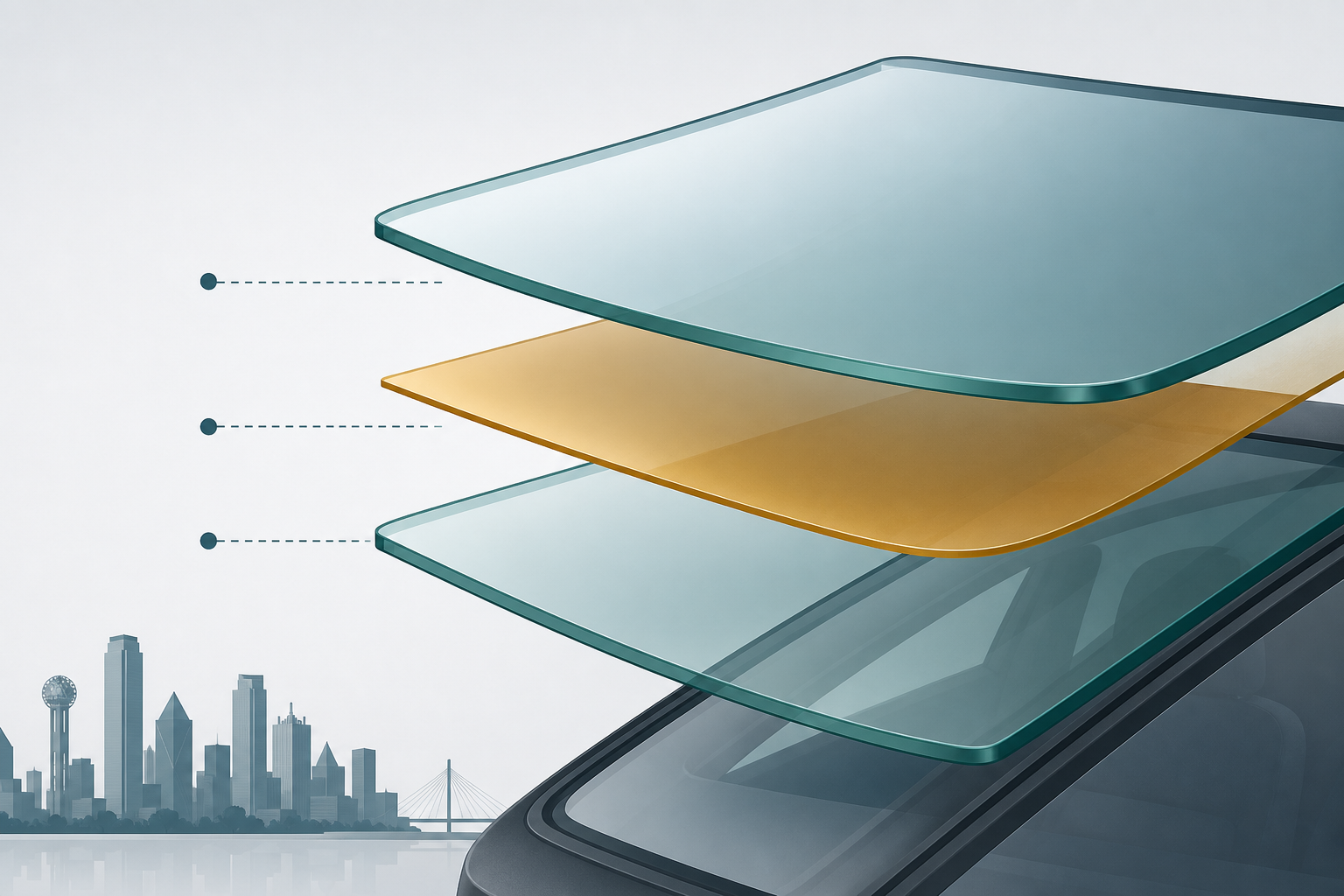
Laminated glass is two sheets and a sheet of plastic
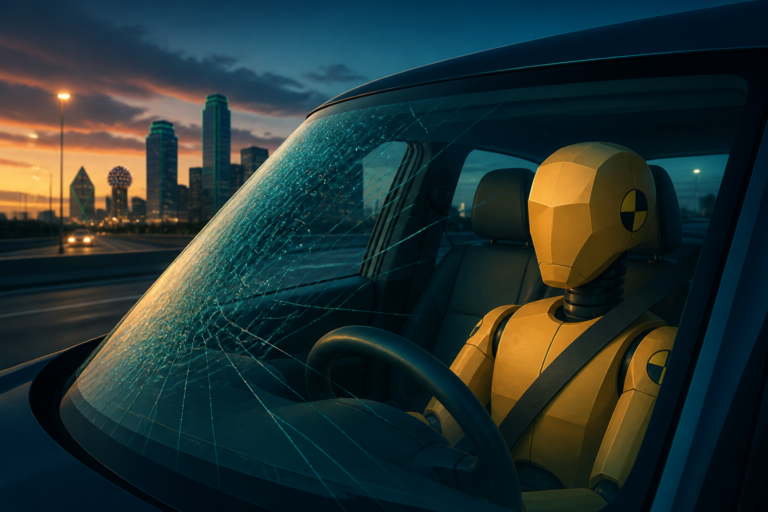
A modern windshield is two layers of glass bonded to a polyvinyl butyral (PVB) interlayer. On impact the outer glass may star. The interlayer holds the shards. That is why a rock on I-35E leaves a chip instead of a hole, and why you can still drive — carefully — with a crack that would have emptied an old tempered pane.
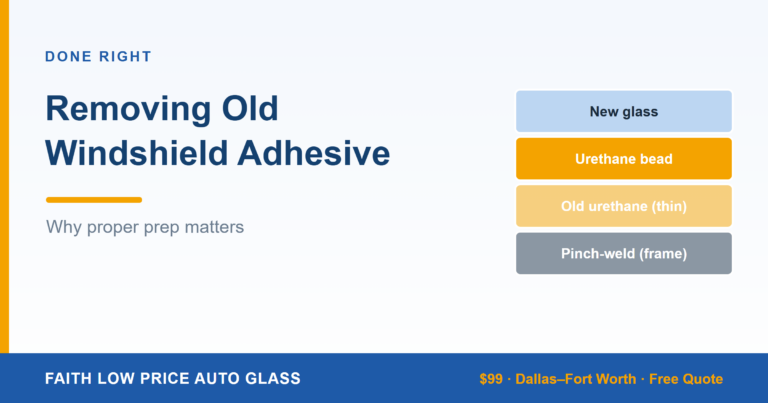
The same sandwich is structural. It helps the roof stand in a rollover and gives the passenger airbag a surface. A windshield that “fits” but sits on a poor urethane bead is not doing that job, even if you can see through it on US-75. Add a second acoustic interlayer and the cabin stays quieter at highway speed, which is why many North Dallas and Uptown vehicles left the factory that way. Swap in a standard single-interlayer part and the road roar comes back.
OEM and aftermarket: the distinction that actually matters
OEM glass is produced to the vehicle manufacturer’s specification, often by the same supplier that filled the factory line. Aftermarket glass is produced by other manufacturers to fit the same opening and, when the part is specified correctly, the same options. Faith installs both. The choice is not “real versus fake.” It is “which part matches this VIN and this budget.”
A good aftermarket windshield copies the shape, VIN window, shade band, mirror button, and sensor pad. A poor one copies only the outline. Distortion, a pad in the wrong place, or a camera window with the wrong curve shows up on a night drive down I-635 more clearly than under shop lights. Ask for the part number and whether it is listed for your options.
Price follows features more than the OEM label. Standard glass on qualifying vehicles is listed from $99 on Faith’s service page. Acoustic, heated, or HUD glass costs more because the part is different. Camera recalibration is a separate operation. Do not compare a basic laminate on an older coupe to a HUD windshield on a loaded truck.
Acoustic, HUD, heated, and rain-sensor glass on DFW vehicles
Commuter cars on Central Expressway and the Tollway are often optioned for quiet cabins. If the manual lists acoustic glass, the replacement should too. Trucks on long I-30 or I-35E runs are frequently ordered the same way.
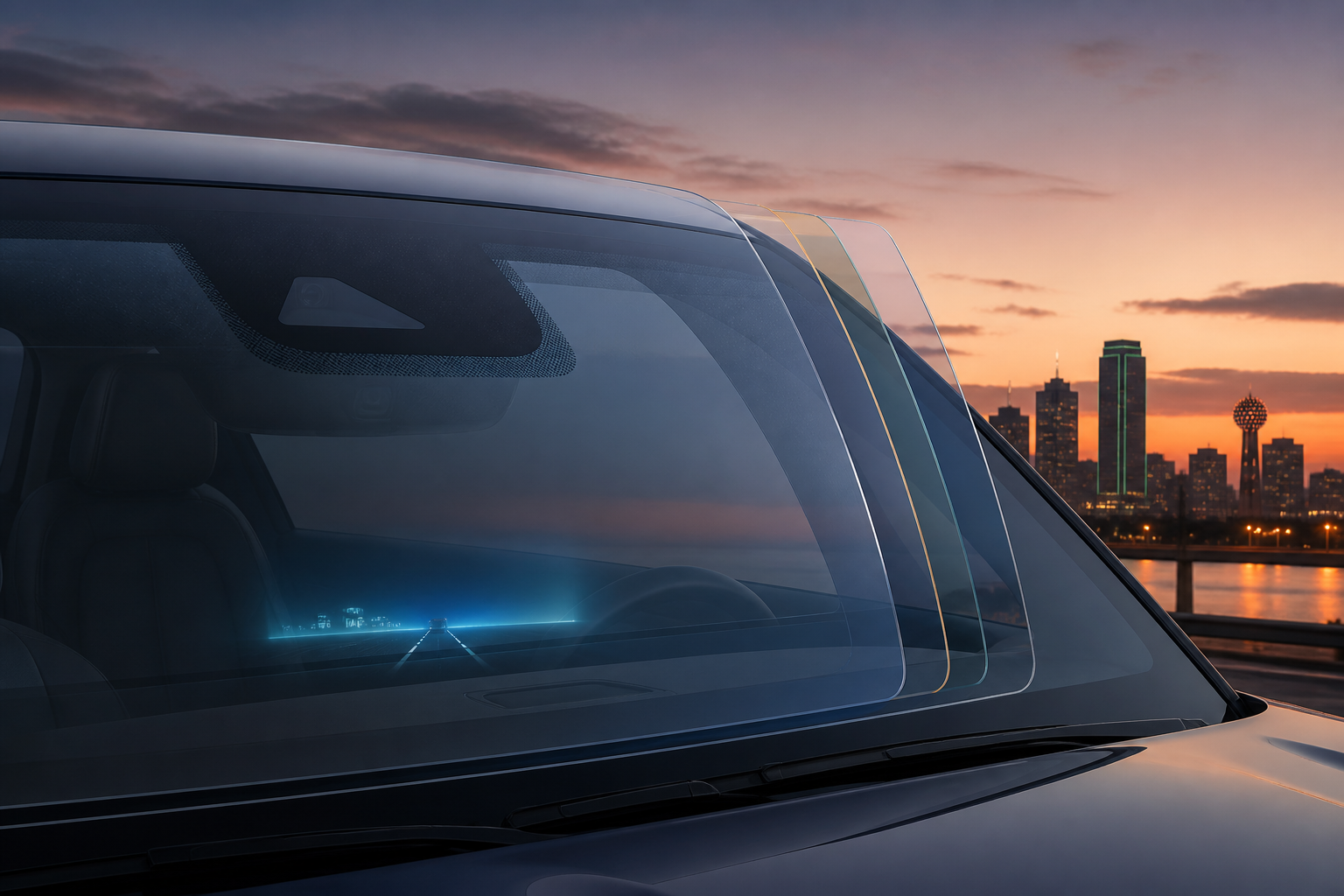
HUD glass is not a sticker. A combiner layer is built into the laminate so the image sits in the driver’s view without a double ghost. A standard windshield in a HUD car will keep rain out and will not throw a clean image. If you use the HUD through North Dallas, say so when you quote.
Heated wiper parks and heated windshields need connectors in the right corners. A part without the grid leaves unused plugs. Rain-sensor pads are a similar trap: leave the pad off and the wipers sit through a downpour on LBJ or thrash on a dry mist. Forward cameras need the correct thickness and a clean optical zone. Faith recalibrates in house when the vehicle requires it. The glass and the calibration are a pair.
Matching the VIN so the part on the rack is the part on the car
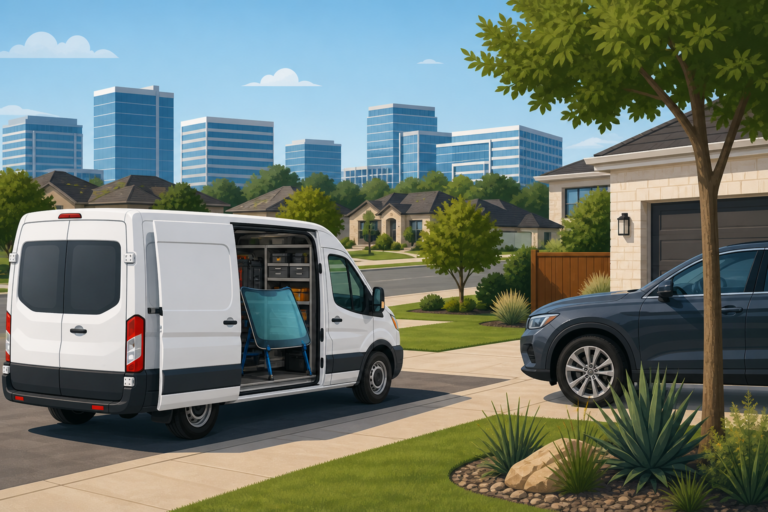
Inventory is not a pile of “Toyota size” and “Ford size.” It is a list of part numbers. The VIN decodes trim, glass code, and options faster than a conversation about “the gray SUV.” When you request a quote, send the VIN. When the technician arrives at a Lakewood driveway or you pull into 807 Fletcher St, they should confirm the part against the car before the old urethane is cut.
If the correct windshield is not on the shelf, wait on the part. Faith often has same-day availability when the glass is in stock. The shop is open six days a week, with 24/7 online quoting so you can start the VIN check at night. Bring the features list if you have it — rain sensor, HUD, acoustic, camera, heated wiper park — especially on a used car from Garland or Irving whose window sticker is gone.
Why the wrong windshield creates new problems
Wind noise at 70 on I-635 is usually the first complaint. Water in the headliner is next. Then electronics: a camera that will not calibrate, a rain sensor that cannot see, a HUD that ghosts. Last is safety — distortion in the driver’s sweep, or a laminate that does not meet the structural spec. None of that is a reason to fear aftermarket glass as a category. It is a reason to fear an unmatched part. Faith will say when a specialty part or calibration moves the price above the standard-glass starting point. Workmanship on the set is covered for life.
If you want the service path that uses this glass, read the windshield replacement details. If you want to know whether a mobile visit can meet you in Oak Cliff, Pleasant Grove, or a suburb the shop names — Plano, Irving, Garland, Mesquite, Richardson, Carrollton, Arlington — check the service area. To get a VIN-matched quote, call (214) 571-6266 or send the VIN through the contact form. The right windshield is the one built for your car, not the one that happened to be on the truck.