In The City Of Dallas Can I Tint The Front Of My Windshield
The question people type is usually broader than they mean. “Can I tint my windshield in Dallas” often hides a narrower one: can I put film on the front windshield — the pane you look through on I-35 and I-30 — not the doors and not the backlite. For that front pane, Texas is blunt. Below the AS-1 line the glass is supposed to stay clear. A factory shade band at the very top is normal. A smoked film across the driver’s sight line is the version that turns into a ticket and a night-driving problem. This is not legal advice. Faith Low Price Auto Glass replaces windshields; they do not install tint.
The front windshield is its own category
Side-window rules and windshield rules are not interchangeable. Front doors on a passenger car in Texas bottom out at 25 percent VLT. The rear of a passenger car can go much darker. The front windshield is not scored that way. The limit is a line on the glass, not a percentage you can “match” to the doors. If a friend in Irving filmed their fronts and their windshield the same shade, they did not discover a loophole. They filmed the one pane Texas treats as a safety view.
That distinction matters when you are standing in a parking lot off Fletcher Street comparing quotes. A tint installer talking about door percentages is answering a different question. Ask specifically: will any film sit below the AS-1 mark on the windshield? If the answer is a shrug, you already have your answer. City of Dallas enforcement follows the statewide windshield standard.
How to find the AS-1 line on your glass
Stand outside the car, look at the upper passenger-side corner, and hunt for a small etched cluster: DOT, the glass manufacturer, M numbers, and usually “AS-1.” The AS-1 designation is the safety marking for laminated windshields in the United States. The vertical position of that cluster is the practical “line” officers and inspectors use. Film above it, in a non-reflective strip, is the treatment Texas typically allows. Film that covers the etch and keeps going toward the hood is the treatment that fails a look test from the next lane.
On some vehicles the etch sits a little lower because of a wide factory band or a rain-sensor pad. Do not invent your own line by lining film up with the rearview mirror or the visor clip. Those interior parts move. The etch does not. If the mark is under a black ceramic frit or a camera bracket, a glass technician can point to it when the cowl is in view.
Factory shade band versus film that someone added later
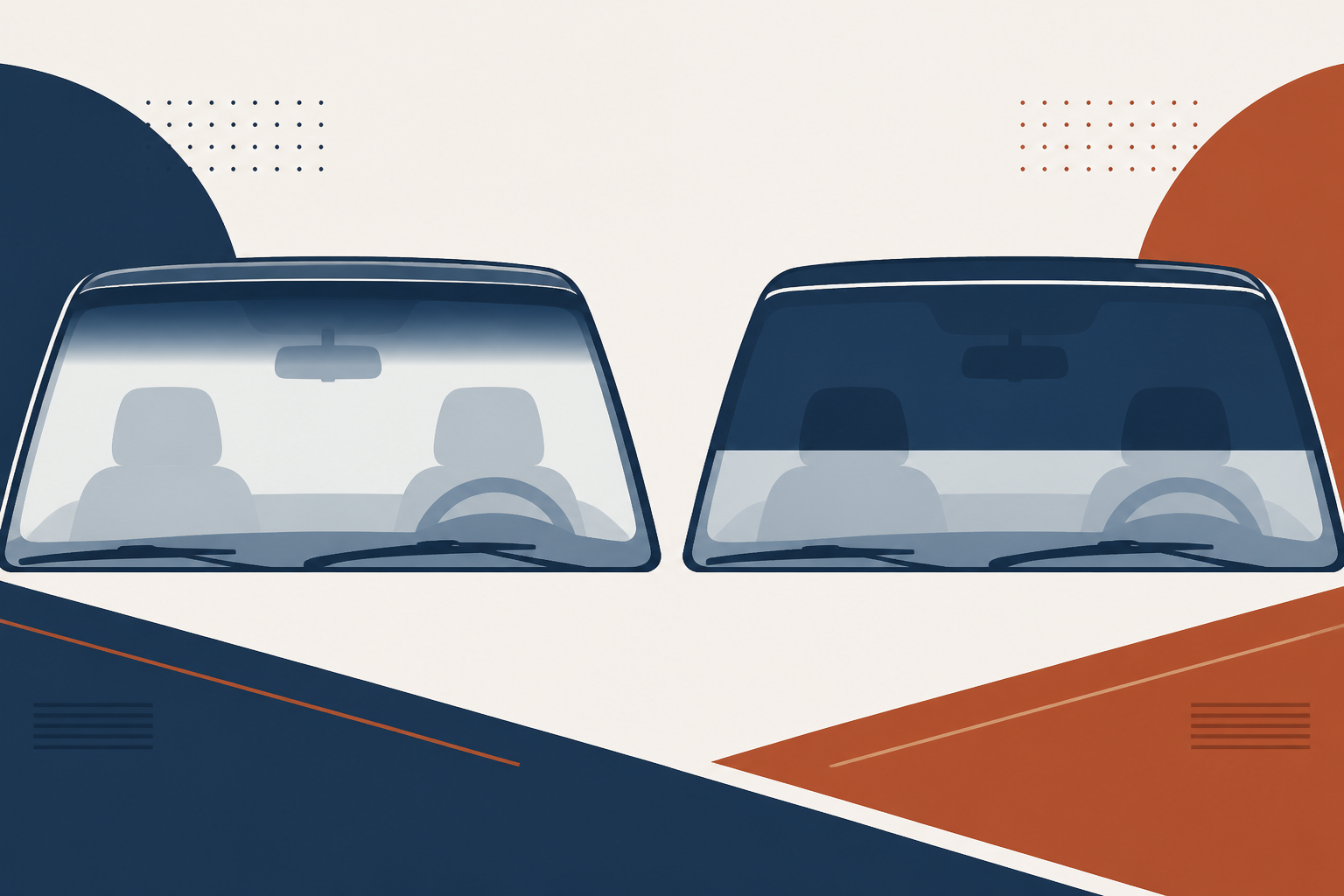
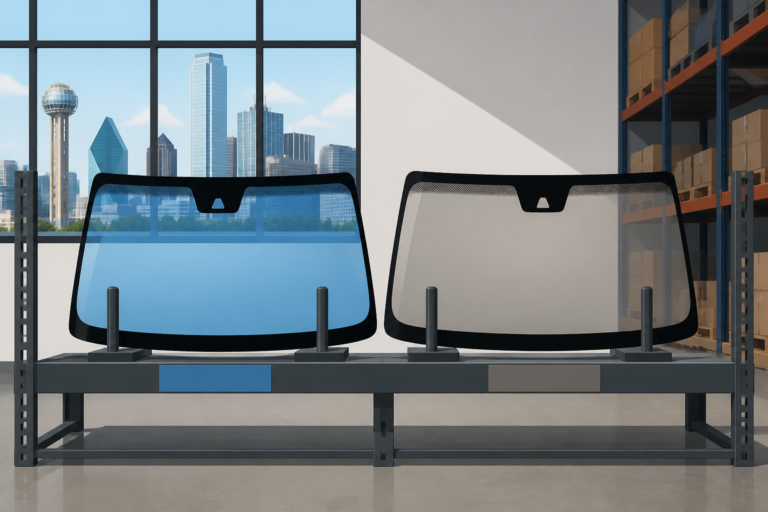
Almost every modern windshield already has a shade band: a green or blue gradient in the laminate, plus a black frit around the edges. That is not aftermarket tint. It does not peel. It does not bubble in a Dallas August. Aftermarket film is a sheet, usually with a liner and adhesive, that a person rolled on after the car was built.
You can tell them apart in daylight. Factory glass looks even; added film often has a cut edge, a slight haze, or a line that does not match the frit. At night, aftermarket film on the windshield throws extra reflections from headlights and overheads on I-30 through Downtown. A shade band does not. If you bought a used car in Garland or Mesquite and the “windshield tint” was listed as a plus, check whether you inherited a factory band or a film job that already sits illegal.
Why a fully tinted windshield is a night-driving problem on I-35 and I-30
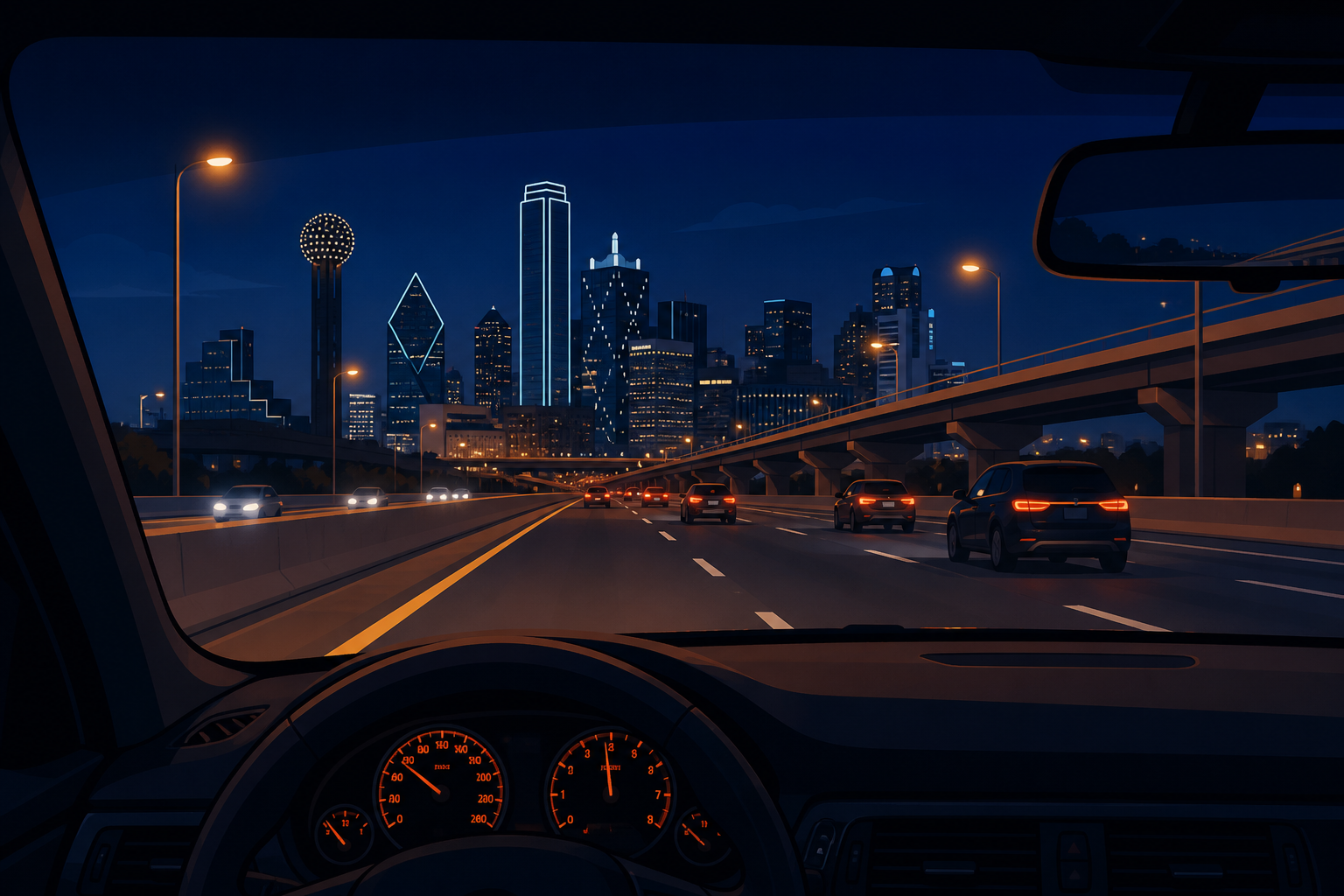
A dark windshield is not only a citation. It is a visibility cut at the worst hours. North Texas summer days are bright; the same film that feels “comfortable” at noon on LBJ 635 becomes a tunnel at 9 p.m. when you are merging under the I-35E decks. Headlights bloom. Lane markers wash out. Rain on the glass plus film haze is worse. That is why the rule is written around the driver’s view, not around cabin temperature.
There is also a safety-system angle. Many late-model windshields carry a camera behind that glass. Film in the camera’s cone can confuse lane-keeping and automatic emergency braking, or force a messy recalibration later. Faith Low Price Auto Glass does in-house ADAS camera recalibration when a windshield replacement requires it. They still will not film that camera window for you. Clear glass is the starting point those systems were designed around.
When aftermarket film creeps below the AS-1 mark
Creep is common. An installer cuts a “visor strip,” then the sheet sags a half inch in the heat, or the cut was ambitious from the start. The extra film sits right in the area you use to read signals on Central or to catch a truck’s brake lights on I-45. From outside, the car looks like it has a second eyebrow. From a patrol car, it looks like windshield tint.
Peeling that strip yourself is possible and also easy to botch. Heat guns on laminated glass, razor blades near the ceramic frit, and leftover adhesive in the camera area create new problems. If the film is the only issue and the glass is otherwise sound, a reputable tint shop can remove it. If the glass is also cracked, starred, or delaminating around the film edge, removal is a detour. Replacement puts a new, clear pane in the opening and ends the argument about where the old film sat.
What you get when that windshield is replaced
A replacement windshield arrives clear. It will have its own factory shade band and AS-1 marking. It will not come with the illegal film that was on the broken glass. That surprises owners who had grown used to a smoked view. Plan for it. After install, the cabin will be brighter. Sunglasses go back on the visor. Any legal strip, if you still want one, is a later decision with a tint shop that stays above the new AS-1 line.
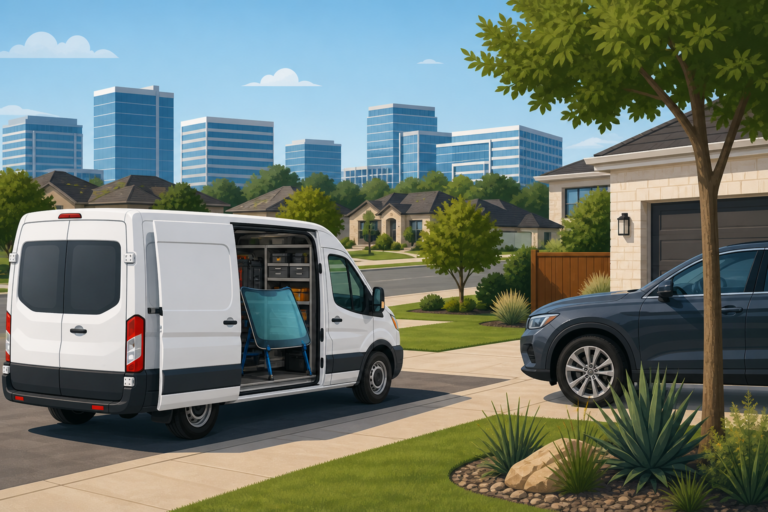
Faith Low Price Auto Glass works from 807 Fletcher St, Dallas, TX 75223, at (214) 571-6266, six days a week, with 24/7 online quotes. Mobile and same-day appointments cover Dallas and DFW cities including Plano, Irving, Richardson, and Arlington. OEM or aftermarket glass and automotive-grade urethane are the glass offering. Qualifying vehicles with standard glass are listed from $99; specialty glass costs more. They can help start an insurance claim when comprehensive applies. They cannot promise a deductible.
Next step if the glass is also cracked or chipped
If the front windshield you wanted to tint is already damaged, stop stacking projects. A chip in the driver’s view, a crack that runs to the edge, or a camera bracket that no longer sits flat is a replacement conversation. Use the contact page or call the Fletcher Street shop. Check the service area if you need mobile service in the metro. Get clear glass back, then revisit any legal strip with someone who installs film — not with the shop that just set the urethane.